Picking your first mountain bike comes down to where you'll ride and what you're willing to spend. Here's the honest breakdown — no jargon, just what matters.
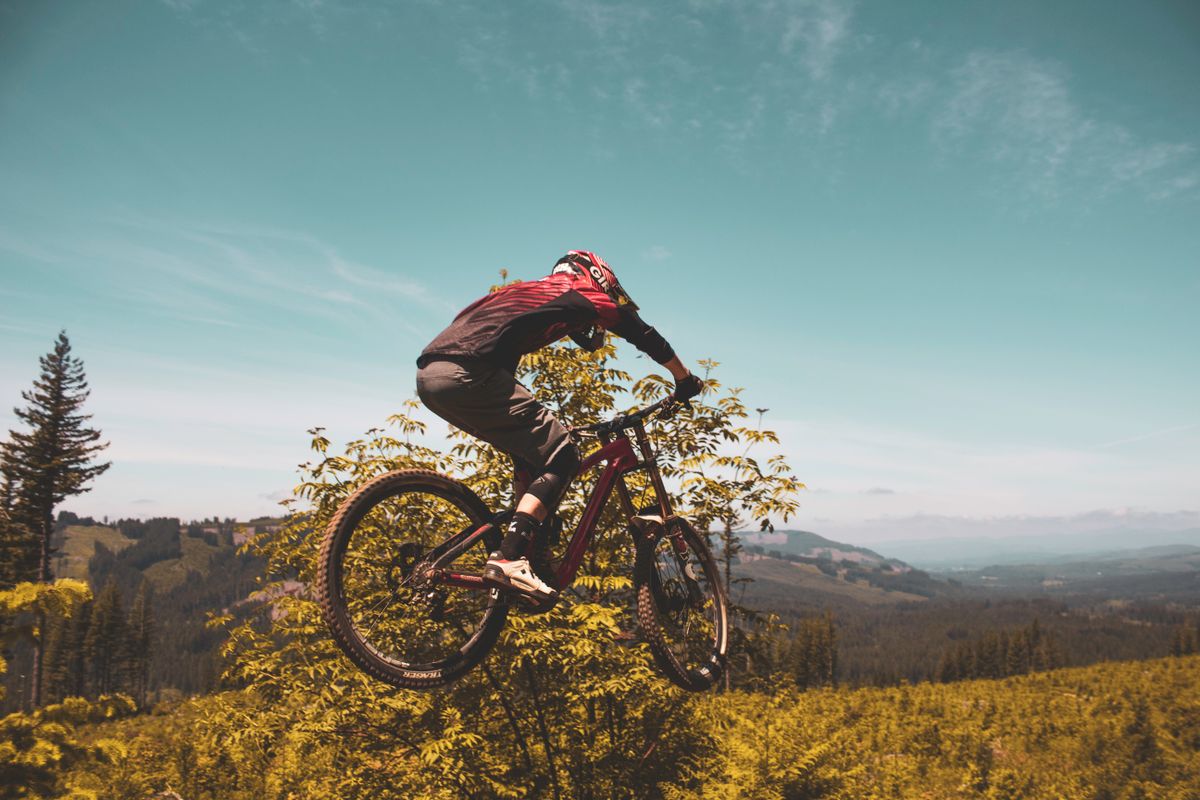
A hardtail has front suspension only — the fork absorbs bumps but the rear of the bike is rigid. Full suspension adds a rear shock, so both wheels can move independently over rough terrain. For beginners riding green and blue trails, a hardtail is the better first bike: lighter, simpler, cheaper, and easier to maintain. The stiffer frame also gives better feedback as you learn technique. Full suspension shines on technical terrain — rocks, roots, drops — where you need rear wheel traction and control. Expect to pay $500–$1,200 for a quality hardtail and $1,500–$3,500+ for a capable full suspension.
The two main wheel sizes are 27.5 inch (650b) and 29 inch. Larger 29-inch wheels roll over obstacles more easily, maintain speed better, and offer more traction — they're now the standard for trail and XC riding. Smaller 27.5-inch wheels accelerate faster, feel more playful, and fit shorter riders better (under 5'4" especially). Most modern trail bikes for adults ship with 29-inch wheels. Some full-suspension bikes use mixed wheels (29" front, 27.5" rear) called "mullet" setups — a compromise some riders prefer for technical terrain. Unless you're a shorter rider, start with 29s.
Aluminum frames dominate the beginner and mid-range market ($500–$2,500) — light enough, stiff, and durable. Carbon fiber frames are stiffer and lighter but add $500–$1,500 to the price and are more expensive to repair if damaged. For a first mountain bike, aluminum is the right call. The components (fork, drivetrain, brakes) matter far more than whether you save 200 grams with carbon. A well-spec'd aluminum bike will outperform a cheap carbon bike on the trail every time.
Hydraulic disc brakes are essential — mechanical discs and rim brakes don't perform well in wet or muddy conditions. A 1x drivetrain (single front chainring, wide-range rear cassette) is now standard for trail bikes and eliminates the front derailleur for simpler shifting. Look for at least a Shimano Deore or SRAM SX groupset at the entry level; Shimano XT or SRAM GX represents a meaningful performance jump. The fork is the other key component — name-brand forks from RockShox or Fox hold up and can be serviced. Avoid bikes with no-name forks at any price point.
Mountain bikes size by frame height — Small, Medium, Large, XL. Use the manufacturer's geometry chart (reach and stack numbers) rather than just S/M/L designations, which vary between brands. As a rough guide: riders 5'4"–5'7" typically fit a Small, 5'7"–5'10" fit a Medium, 5'10"–6'2" fit a Large, and 6'2"+ fit an XL. When in doubt, choose the larger size — reach can be shortened with a shorter stem, but a bike that's too small will always feel cramped. If possible, test ride before buying.
Used is a smart choice for a first mountain bike if you buy carefully. Look for bikes 2–5 years old from quality brands (Trek, Specialized, Giant, Santa Cruz, Cannondale). Inspect the suspension for smooth movement with no play, check brake rotor wear, and look for cracks around welds. Avoid bikes with bent or cracked frames. Facebook Marketplace and PinkBike's buy/sell section are the best places to find deals. Budget bikes from department stores (Walmart, Target) look like mountain bikes but are not — avoid them entirely.
Not for trail riding. A standard MIPS-equipped bike helmet is appropriate for green and blue trails. Full-face helmets are for downhill and enduro racing where speeds are high and crashes more severe. For beginner trail riding, invest in a quality trail helmet with good ventilation — Troy Lee Designs, POC, and Giro make well-regarded options in the $80–$180 range.
See also: Mountain Biking for Beginners • How to Choose a Bike Helmet • Bike Maintenance Basics
